
📹 Watch: Generating a Client Progress Report
Steps to Generate a Client Progress Report
- Select the Client's name from the [Clients] drop down list.
- Select [Progress] from the navigation menu
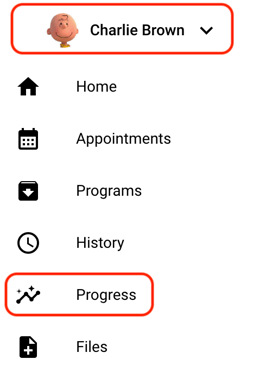
- Select the [Reports] tab on the far right.
- To create a new report, select [Add New Progress Report].
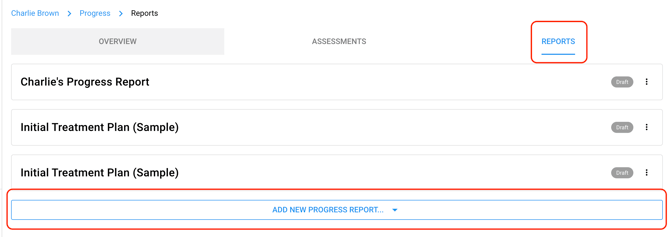
- Here, you can choose to select a templated report or create a report from scratch.

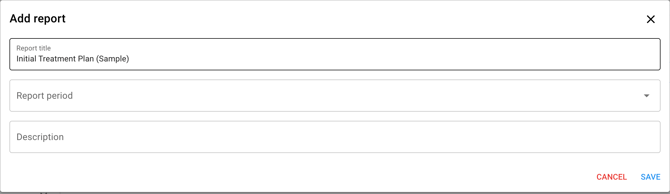
- Select a report, then edit the title, description and report period as desired and click [SAVE].
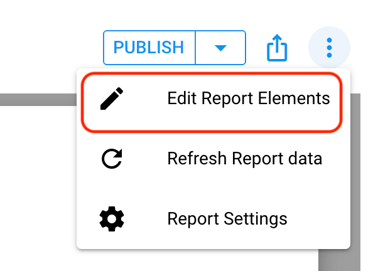
- If you've selected a template, those components should auto-populate on your report. To edit any component, simply click on that section or select the three vertical dots in the top right corner and select [Edit Report Elements].
- When editing, you will have the option to add sections, including custom report section templates that have been created for your organization.
To learn more about Report Section Templates, CLICK HERE.
NOTE: Filters for target level graphs and target data tables cannot be edited at the client level, they can only be edited on the parent template.
- To ensure quick loading time, the graphs in your plan default to hidden in edit mode, but you can see them by selecting [Show this graph] or [Show all graphs].
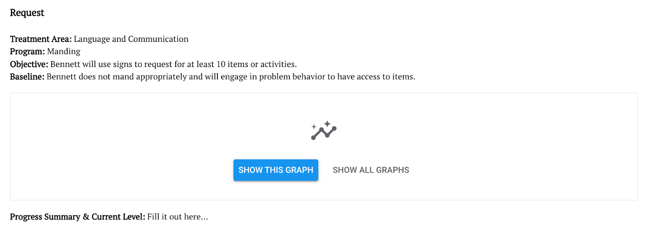
- Click on any section to open the text editor and add additional information into the report
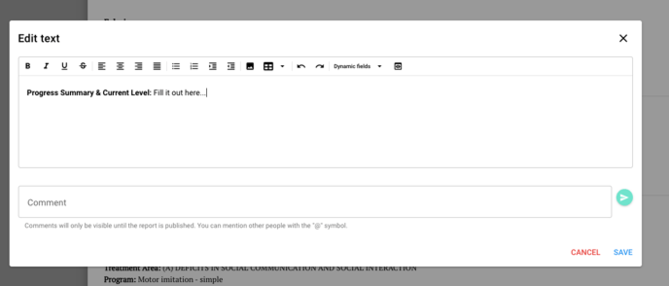
Note: Remember to save your report often. Navigating away from the report with unsaved changes will result in any updates being deleted.
- To export your report, select the
 "Export" icon on the top of your report. This will produce a pdf document that you can submit to funding sources or save in your files for documentation.
A note about special characters:
Certain special characters and symbols in reports will not export. These will appear as normal within the platform, but when export appear as a 🆇
We recommend not using special characters in program data fields or in reports to avoid this issue. These include emojis, arrows, and non-breaking spaces.
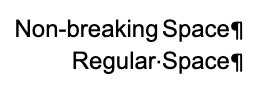
Non-breaking spaces are special characters that may be automatically inserted into a word document. These are used to keep words together to avoid wrapping text to the next line.
One way to spot them is to turn on formatting marks in word, or show non-printing characters in google docs. Regular spaces will appear with a small dot, where non-breaking spaces are slightly narrower with no dot, indicating that it is a symbol instead of a space. Example from Microsoft Word:
To avoid this issue in exported reports, you can:
- Adjust the settings on your word processor to avoid automatic inserting of these non-breaking spaces
- Use the “find and replace” option in word to find all symbols and replace them with spaces
- Manually delete the non-breaking space and insert a regular space. This can be done within your work processing program or directly within Hi Rasmus.